No graded assignments have been recorded yet. Your data will appear here
automatically as assignments are graded throughout the year.
Check back after your first assignment is returned.
When data appears
Score trends and growth areas across every assignment
Updated automatically
No action needed. Just bookmark this link and return after each assignment.
Private to you
This link is yours only. No one else can see your data.
snapshot
avg total score
out of 8
topic dev avg
out of 5
conventions avg
out of 3
consistency index
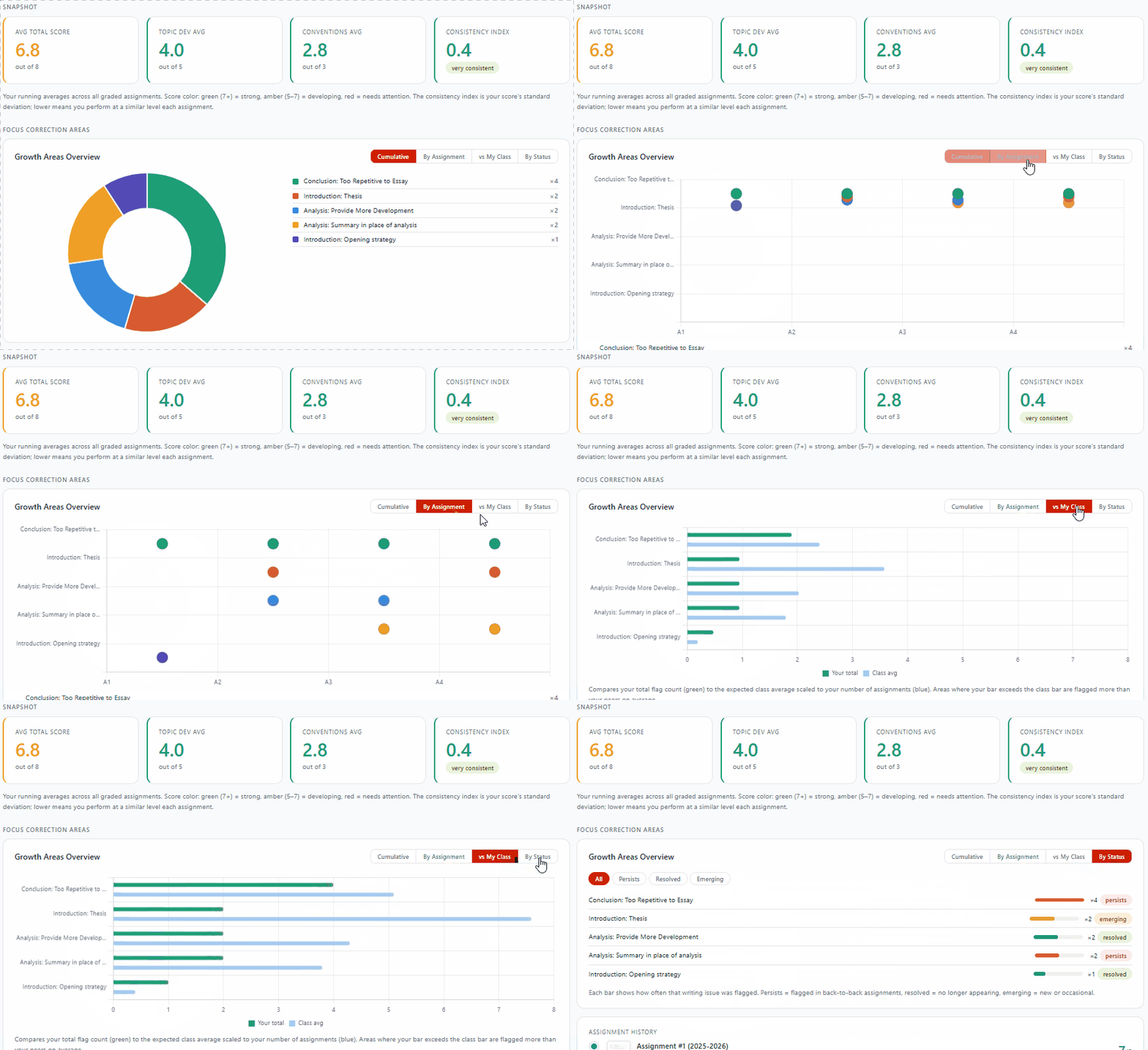
Your running averages across all graded assignments. Score color: green (7+) = strong, amber (5–7) = developing, red = needs attention. The consistency index is your score's standard deviation; lower means you perform at a similar level each assignment.
focus correction areas
Growth Areas Overview
Each bar shows how often that writing issue was flagged. Persists = flagged in back-to-back assignments, resolved = no longer appearing, emerging = new or occasional.
assignment history
score trajectory
total score by assignment
Each point is your score on one assignment, earliest to most recent. Click any point for details. Toggle class avg to see how you compare.
topic dev vs conventions
Topic devConventions
Your two component scores side by side. Toggle "Show as %" to normalize both onto the same 0–100 scale so they're directly comparable.
score change between assignments
Positive = your score went up from the previous assignment; negative = it went down. Each label (e.g. A1→A2) shows which two assignments are being compared.
peer percentile
0th pct50th100th pct
The marker shows where your average score sits in your class. Sliding right = stronger relative performance. Hover the marker for details.
writing skill profile
proficiency by essay zone (higher = stronger)
A larger shape means fewer issues flagged in those essay zones. Green fill = all axes 80+; amber = any below 80; red = any below 50. Numeric scores are shown at each vertex. Toggle class avg to overlay a dashed class-average shape. Click any vertex to see specific issues in that zone.
feedback absorption
absorption rate
—
of flagged issues not re-flagged next
Absorbed (gone next A)
Still recurring
A high absorption rate means you acted on your teacher's feedback. Only calculated when you have two or more graded assignments.
tag history by assignment
Each row is one feedback tag. Filled = flagged that assignment; green ✓ = resolved (was present last time, gone now); dot = never flagged. Scroll horizontally if needed.
Each point is one MC assignment in chronological order. Filter by passage type or toggle class avg to compare.
performance by text type
Your average score vs class average, split by passage type.
personal bests
score vs class average — by assignment
Bars above zero = you scored higher than the class; below = lower. Follows the passage-type filter above.
mc vs essay
Gap (MC% − essay%)
MC lowerEvenMC higher
Essay %
—
MC %
—
Gap
—
A positive gap means your MC scores run higher than your essays. A negative gap may mean you understand texts well but need more support translating that to writing.
all mc assignments
Loading your AP Lang data…
snapshot
avg total score
thesis avg
out of 1
evidence & commentary avg
style & sophistication avg
out of 1
consistency index
Your running averages across all graded AP Lang assignments. Score color: green = strong · amber = developing · red = needs attention. The consistency index is the standard deviation of your total scores; lower means more consistent performance each assignment.
focus correction areas
Growth Areas Overview
Each bar shows how often that writing issue was flagged. Persists = flagged in back-to-back assignments, resolved = no longer appearing, emerging = new or occasional.
assignment history
writing skill profile
proficiency by rubric component & essay type (higher = stronger)
Six writing domains based on your Focus Correction Areas — higher means fewer FCA tags in that area. Green fill = all axes 80+; amber = any below 80; red = any below 50. Filter by type to see your FCA profile for Rhetorical Analysis, Argument, or Synthesis assignments only. Toggle class avg to overlay the class-wide average.
score trajectory
score over time
Total Score
Evidence & Commentary
Thesis & Style (binary — ✓ scored · ✗ missed)
rubric component averages
Your average on each rubric component, shown as a percentage of the maximum points available.
ra · arg · syn performance
Average total score and rubric sub-scores split by essay mode. T = Thesis, E&C = Evidence & Commentary, S = Style & Sophistication.